

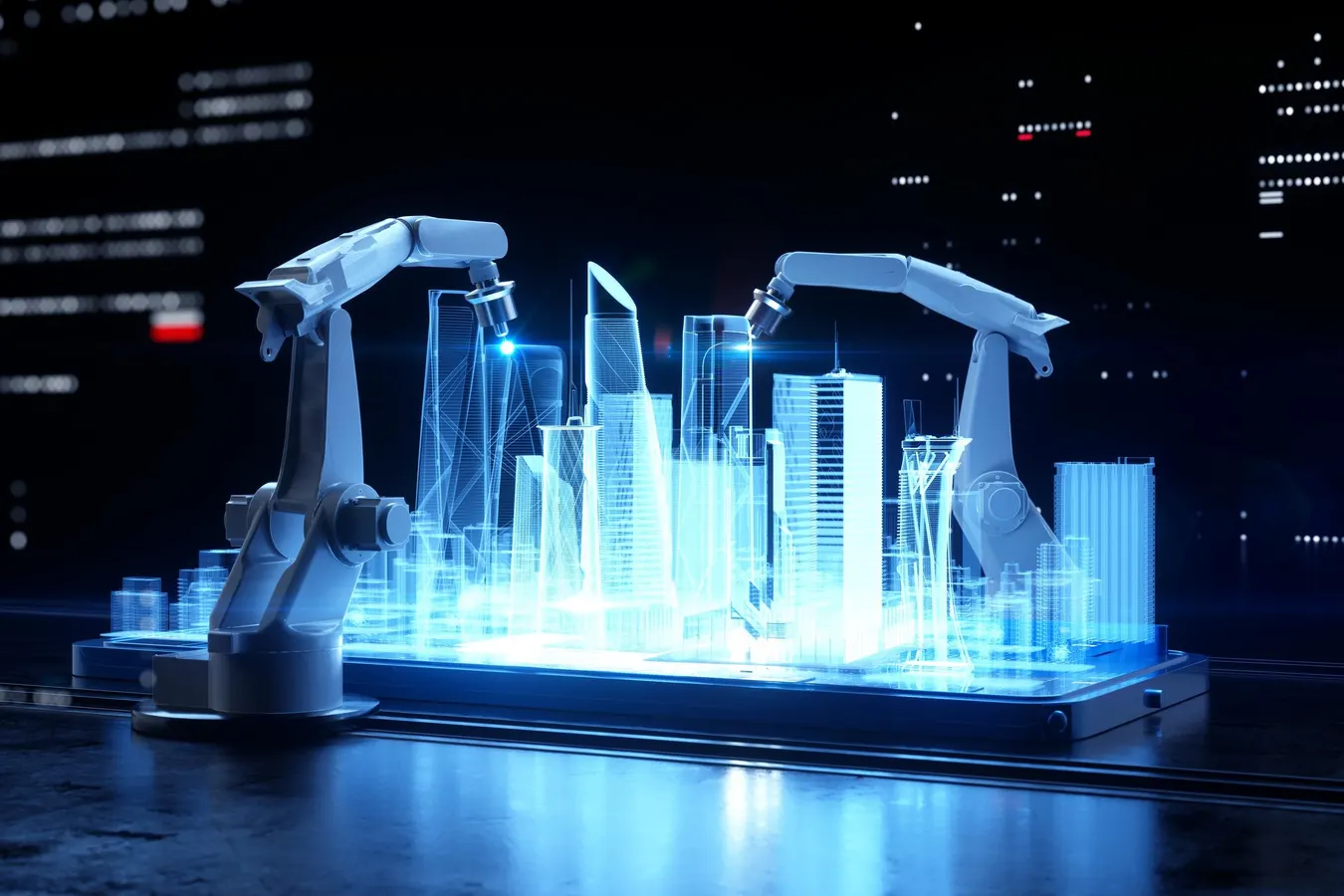
AI-driven digital twins were groundbreaking technologies in smart city and manufacturing setups as of 2025. They are computerized replicas of physical systems, assets, or processes that enable real-time monitoring, simulation, and optimization through interoperability with AI, IoT, and big data analytics. Use case applications of their uses are transforming better operational efficiency, predictive maintenance, and city management.
Use Cases in Manufacturing
At the factory shop floor level, digital twins enable production lines, machines, and product lifecycles to be simulated virtually end-to-end. AI fills the models with predictive analytics, enabling factories to forecast equipment failure, reducing unplanned downtime and maintenance costs. Businesses can model out production scenarios for workflow streamlining, enhancing quality control, and more flexible design.
Smart manufacturing employs AI-based digital twins to facilitate autonomous production whereby the equipment automates its own optimization and operates in tandem with other pieces of equipment. Interoperability with sensor-rich environments and edge computing provides real-time response to disruptions. For example, Siemens and NVIDIA have developed AI model-based solutions to drive robotics and defect inspection automation rapidly and efficiently and transform manufacturing into a faster and more precise process.
Role in Smart Cities
Smart cities utilize digital twins to offer virtual representations of city infrastructure like roads, traffic, utilities, and environment. Simulation using AI allows city managers and planners to simulate resource optimization, policy, and project performance.
They enable traffic flow to be optimized to combat congestion, energy management to attain sustainability, and response planning if an accident or natural disaster were to occur. Digital twin cities are more citizen-involving through open dashboards and customized services through real-time analysis.
Advantages and Future Prospects
Digital twins driven by artificial intelligence deliver greater operating understanding, facilitate earlier decision-making, and allow for continuous improvement. With enhanced computation through AI, digital twins will increasingly allow autonomous adaptation to new circumstances to promote greater resilience and sustainability.
AI, 5G/6G connectivity enhancements, augmented reality, and blockchain features will increasingly empower the operation of digital twins by 2027 and deliver immersive and secure spaces for simulation and interaction.
Conclusion
Digital twins driven by AI are reshaping manufacturing and smart city operations through linking the physical and the digital with real-time intelligence. Through their application, complex things work better, cost less, and develop more sustainable and responsive systems. With expanding usage, digital twins will become part of Industry 4.0 and smart city innovation platforms to deliver a smarter, connected future.