

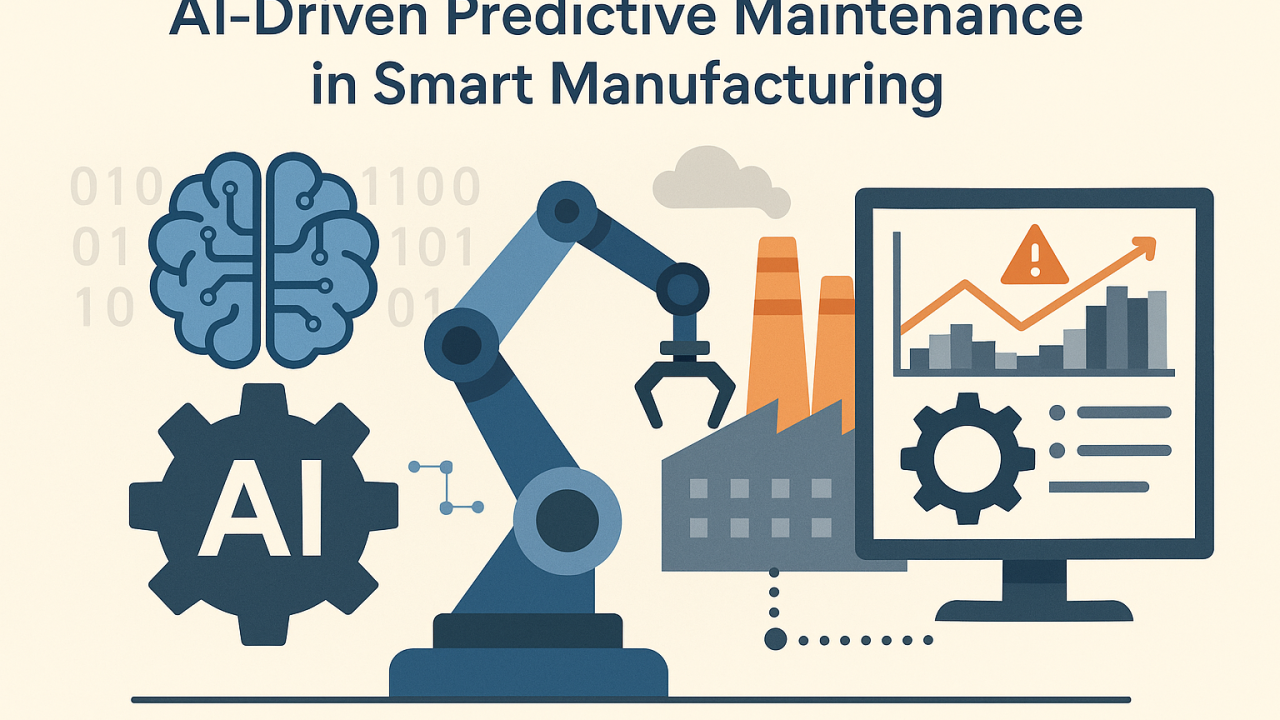
As Industry 4.0 unfolds, AI-based predictive maintenance is one of the pillar technologies that redefine factory operations. Leverage real-time data, machine learning algorithms, and predictive analytics to enable manufacturers to predict equipment failure beforehand, minimize downtime, lower maintenance expenditures, and attain operational efficiency.
The Shift away from Reactive Maintenance to Predictive Maintenance
Maintenance practices are generally of the reactive type where maintenance is done after equipment failure, or preventive maintenance with its reliance on pre-scheduled plans regardless of equipment status. Both methods have gigantic disadvantages: reactive maintenance creates costly unexpected downtime, and preventive maintenance leads to premature replacement of parts and labor.
Predictive maintenance driven by AI turns this mathematics on its head. By monitoring with sensing equipment via sensors all the time, AI systems are learning constantly from patterns of equipment usage—vibration, temperature, acoustic emissions, and power consumption—and are detecting in advance signs of wear or failure. This means intervention only when required, optimizing use of resources and maintaining production continuity.
How AI-Powered Predictive Maintenance Works
It begins with sensors on mission-critical devices, capturing multi-dimensional streams of information. These information are sent over secure Industrial Internet of Things (IIoT) networks to edge or centralized computing environments, where data are processed and analyzed by AI and machine learning algorithms. Standard approaches include time-series analysis, anomaly detection, and classification models that forecast Remaining Useful Life (RUL) of equipment.
When the system first identifies a potential problem, it sends out warnings fully with accurate diagnostics and recommended repairs that enable maintenance personnel to schedule repairs during planned downtime. Integration of ERP and factory management system also eases workflow through automated maintenance orders and spare parts inventory control.
Benefits of AI Predictive Maintenance for Manufacturing
AI predictive maintenance has some tangible benefits:
.ISupportInitialize
- Decreased Unplanned Shutdown: Premature fault detection can reduce unscheduled equipment downtime by as much as 50%, safeguarding the production schedule.
- Cost Savings in Operation: Planned maintenance optimizes spare parts and labor utilization and saves operational costs as much as 30%.
- Longer Equipment Life: Maintenance at the best possible time allows equipment to run to the minimal level and aids in longer service life.
- Enhanced Workplace Safety: Preventive failure at an early stage prevents accidents, and hence a safe working environment is available for workers.
- Evidence-Based Decision-Making: AI capability allows constant optimisation of maintenance activities and factory operation in general.
AI Predictive Maintenance Implementation Roadmap
Implementation is a set of a process step:
- Objective Setting and Analysis: Analyse existing maintenance processes, data preparedness, and set objectives.
- Sensor Installation and Networking: Deploy IoT sensors and deploy high-bandwidth networking hardware.
- Data Enrichment and Plumbing: Ensuring data integrity with pipes secured in real-time analytics.
- Training AI Models: Train failure-mode-specific and machine-specific models.
- Model Testing: Test predictions of the model in test environments, adapting alert thresholds based on user feedback.
- Mass Deployment: Mass deploy predictive maintenance to operations and enterprise integration.
- Ongoing Monitoring: Periodically re-train and update AI models to guarantee continuous precision and functionality.
Real-Life Applications and Emerging Trends
World manufacturers are embracing AI-powered predictive maintenance for competitiveness and resilience. Such factories, for example, see their downtime and maintenance costs plummeting dramatically. As algorithms of machine learning and sensors improve, predictive maintenance will become a mainstream aspect of intelligent manufacturing, further blessing intelligent factories with efficiency, flexibility, and sustainability.
With predictive maintenance using AI, smart manufacturing achieves penetration from reactive to proactive asset management and brighter, safer, and cheaper industrial processes.