

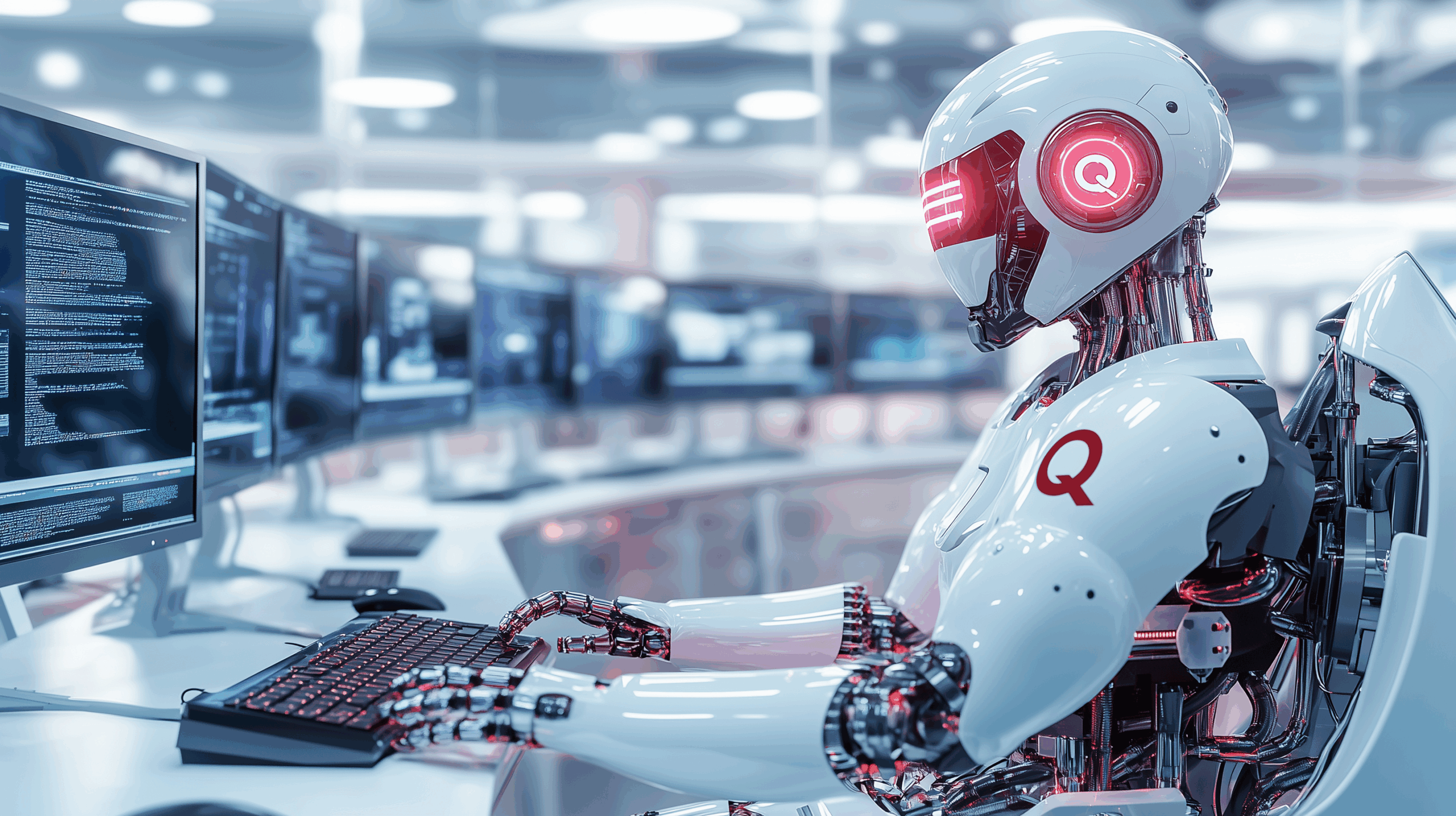
Software developers used to be stereotyped as spending years of late nights and early mornings powered by coffee, broken by theagonizing quest for a sole wayward semicolon. Coding was an art that needed militant, intense focus. That image is now rapidly changing.
The introduction of AI-Powered Code Generation and Debugging is changing the software development lifecycle at its very foundation. These computer programming tools are robot co-pilots who generate, test, and debug code with great precision, potentially turning developer productivity on its head while also making software development a cakewalk for everyone.
Code Generation: From Concept to Syntax
The most notable revolution is the ability of AI models—primarily Large Language Models (LLMs) trained on vast collections of open-source code—to generate functional code from natural language specifications.
Accelerated Prototyping: A developer simply types something like, “Create a Python function that calls into a PostgreSQL database and fetches the last 10 records of customers,” and the AI writes the required syntax, including imports and connection handling. It eliminates the drudgery of boilerplate setup, and developers get to focus on the unique business logic.
Contextual Autocompletion: More than mere functions, AI assistants offer extremely accurate multi-line code completions, both based on the file’s context, the project architecture, and the current needs of the developer. They don’t complete a word; they complete a whole logical block.
Language Migration and Translation: AI enables translating existing code based on an older or less popular language (e.g., COBOL) to one that is newer (e.g., Python or Java) to reduce cost and complexity of system migration significantly.
The benefit is pure velocity. By automating mechanical logic-to-syntax transcription, AI enables fast iteration and prototyping, keeping the developer spending more time on design and architecture.
Bug Finding and Fixing: The Automated Repair
The real time waste in programming is actually not coding, but error detection and repair. AI is an outstanding debugger that can find faults that tend to escape human notice.
Smart Error Explanation: When there is an exception or bug, AI models can inspect the stack trace and surrounding context, providing highly informative explanations of why the error happened, rather than where it happened. This reduces the time a developer spends deciphering obfuscated error messages by an enormous amount.
Automated Correction Proposals: The AI goes one step further by proposing, and in most situations implementing, a high-fidelity correction. For common errors—like null pointer exceptions, synchronization issues, or security flaws—the AI can propose a patched code snippet to be reviewed and integrated.
Security Vulnerability Scanning: Modern AI coding assistance learns from known security patterns. They can proactively notify and suggest fixes for potential vulnerabilities (e.g., SQL injection bugs or hardcoded keys) before the code even reaches the developer’s local machine.
This capability makes the debugging experience more of a rational study of high-quality, AI-suggested solutions than a confused detective work.
Challenges and the Future of the Developer
While AI is a powerful co-pilot, not yet captain. There are still some primary challenges that exist:
Hallucination and Trust: Just as LLMs can “hallucinate” text, they can similarly create technically correct but logically flawed or contextually inappropriate code. The developers must rigorously test and verify all AI-generated output.
Intellectual Property (IP) Risk: Since the models learn from enormous quantities of code, there is an active debate about the possibility of code generated by them accidentally violating the licenses or IP of the sources used for training.
Bad Habits: Overreliance on AI to handle boilerplate can put at risk preventing junior developers from learning actually foundational material, leading to a future development talent pool with excellent prompting capabilities but poor deep architectural understanding.
The future of coding is a symbiotic partnership. The monotonous, detail-driven, syntax-focused portion of coding will be handled by AI, elevating the human coder to the role of architect, strategist, and quality controller. Not only will this partnership produce faster software, but safer, more innovative, and more accessible technology for everyone.