

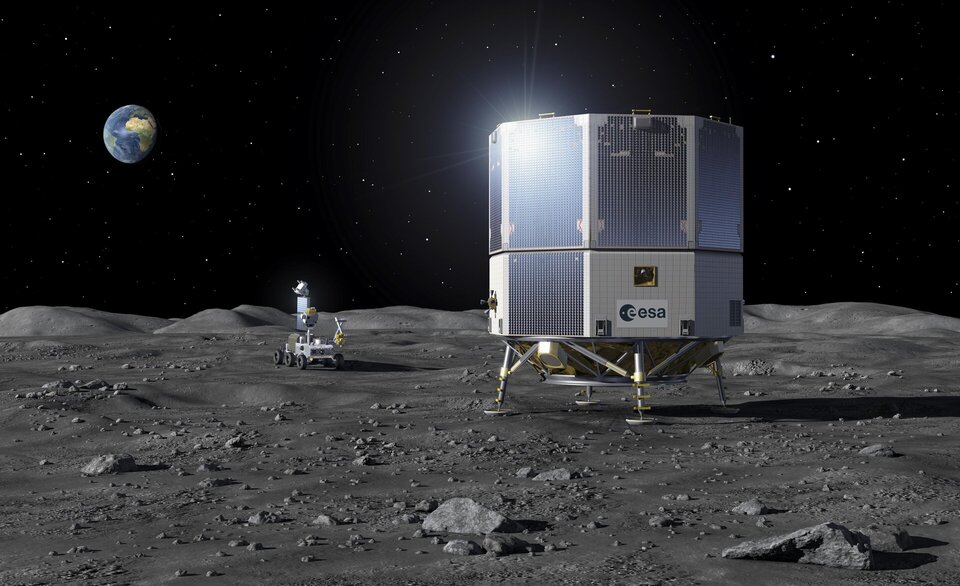
The Moon: From Footprints to Foundations
The Moon is currently the “training ground” for humanity’s leap to Mars. The Artemis program and various private ventures have turned the lunar south pole into a hive of activity.
- VIPER and the Ice Hunters: NASA’s VIPER (and its successors) are the ultimate “prospectors.” These rovers aren’t just looking at rocks; they are equipped with drills to find water ice in the permanently shadowed craters. Why? Because water is the “gold” of space—it can be turned into oxygen to breathe and hydrogen for rocket fuel.+1
- The Lunar Builders: Companies like ICON are testing 3D-printing robots that use regolith (lunar dust) as “ink.” Instead of shipping heavy bricks from Earth, these robots are learning to “melt” the moon’s surface into landing pads and habitats.
Mars: The Search for Life Gets a “Pick-up” Service
Mars has always been the “Big League” of robotics due to the 20-minute communication delay with Earth. In 2026, the focus has shifted from just wandering to a complex relay race.
- Sample Return Mission: The Perseverance rover has been busy filling titanium tubes with Martian soil. Now, the next phase is in motion. We are seeing the deployment of specialized “Fetch Rovers”—fast, agile robots designed to zoom across the Jezero Crater, grab those tubes, and bring them back to a rocket that will launch them into orbit.
- The “Dragonfly” Precursors: Following the success of the Ingenuity helicopter, 2026 sees more advanced aerial drones. These aren’t just toys; they are the “scouts” for larger rovers, mapping out safe paths through treacherous dunes and cliffside caves where life might be hiding.
Why This Feels “Human” Now
The biggest shift in 2025–2026 isn’t just the hardware; it’s the autonomy.
In the past, every move a robot made was programmed by a human in a room in Houston. Today, thanks to on-board AI, these robots are making their own “split-second” decisions. If a rover sees a dangerous rock, it doesn’t wait 40 minutes for instructions—it navigates around it.
We are moving away from “remote-controlled cars” and toward “teammates.” These robots are setting the stage so that when the first woman and next man step onto the lunar surface, the lights will already be on, the oxygen will be flowing, and the landing pad will be ready.
The Bottom Line
Space robotics in 2026 is no longer about “visiting.” It’s about staying. We are building a multi-planetary infrastructure where robots are the pioneers, the miners, and the architects of our future among the stars.