

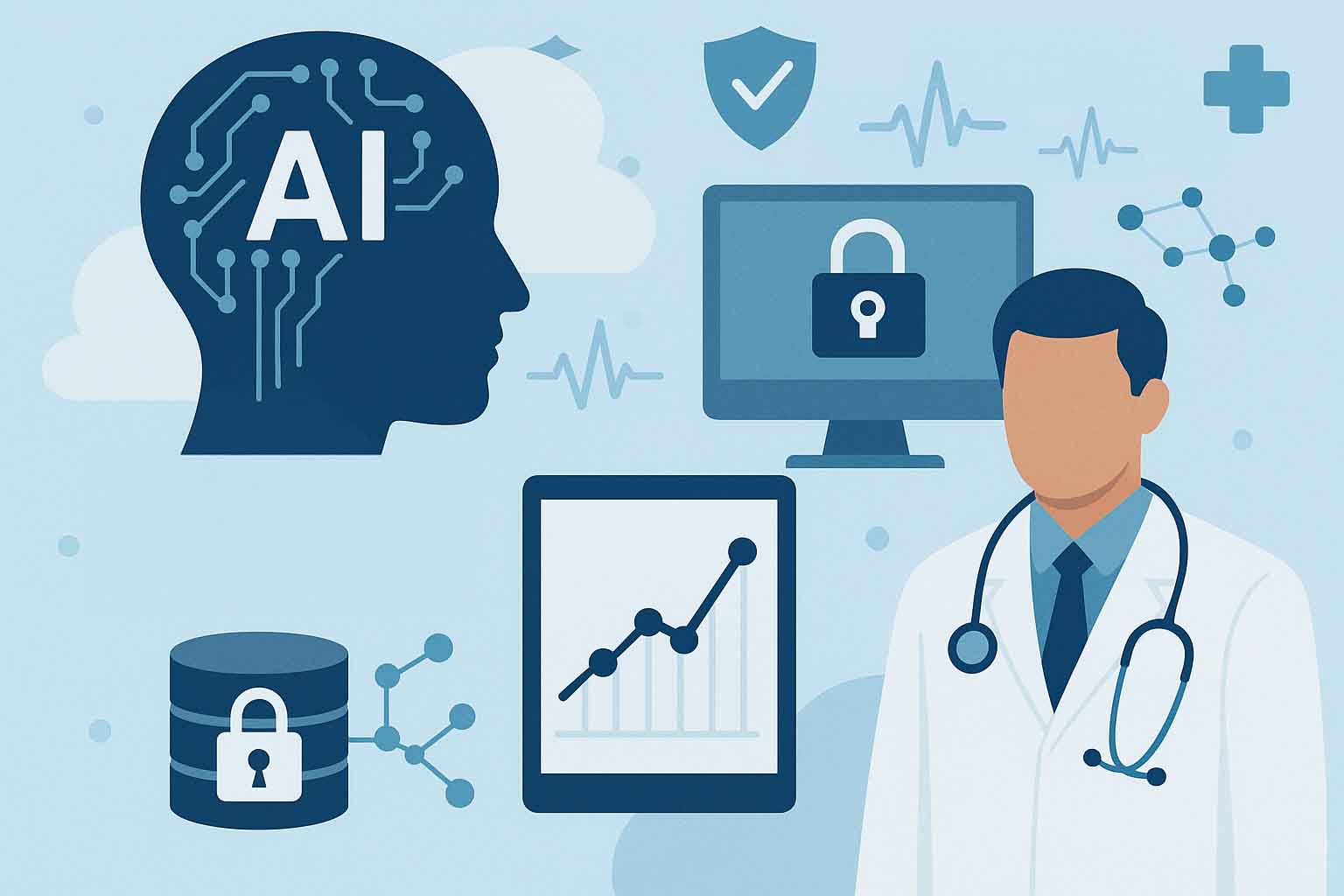
The integration of artificial intelligence (AI) and blockchain technology is rapidly transforming healthcare by enhancing secure data sharing and enabling advanced predictive analytics. This fusion addresses critical challenges in healthcare data management, privacy, and clinical decision-making, promising a future of more efficient, transparent, and personalized care.
Secure Data Sharing through Blockchain
Blockchain technology offers a decentralized, immutable ledger system that ensures patient data is securely stored and accessible only to authorized parties. Unlike traditional centralized databases vulnerable to breaches and tampering, blockchain’s linked “blocks” provide robust encryption and auditability, creating a transparent and tamper-proof record of medical data and transactions. This capability is essential for complying with stringent healthcare regulations such as HIPAA and GDPR, which mandate data privacy and integrity.
By enabling seamless sharing of electronic health records (EHRs) among hospitals, clinics, and research centers, blockchain reduces administrative delays and enhances collaboration. Patients gain greater control over their medical information, deciding who can access their records, which promotes trust and patient engagement. Moreover, blockchain’s role in securing pharmaceutical supply chains helps combat counterfeit drugs by providing real-time tracking and verification of drug provenance.
AI-Powered Predictive Analytics in Healthcare
AI complements blockchain by leveraging the securely stored data to perform advanced analytics and generate actionable insights. Machine learning algorithms analyze complex patient datasets to identify patterns, forecast disease risks, and recommend personalized treatment plans. AI’s ability to process large volumes of data quickly improves diagnostic accuracy and accelerates clinical decision-making.
Predictive analytics powered by AI enables early detection of health conditions, risk stratification, and proactive interventions, which can reduce hospital admissions and improve patient outcomes. For example, AI models can predict the likelihood of chronic disease progression or adverse events, allowing clinicians to tailor care accordingly.
Synergistic Benefits of AI and Blockchain Integration
The combination of AI and blockchain creates a secure and transparent ecosystem where data integrity and privacy are preserved while enabling intelligent healthcare services. Blockchain ensures data immutability and provenance, which enhances the reliability of AI models trained on this data. This integration supports federated learning approaches where AI models are trained across decentralized data sources without exposing sensitive patient information.
Furthermore, AI assists in automating compliance monitoring and reporting by continuously analyzing healthcare processes against regulatory standards, while blockchain maintains an auditable trail of all actions and consents3. This synergy fosters transparency, accountability, and trust among healthcare providers, patients, and regulators.
Challenges and Future Directions
Despite its promise, the integration of AI and blockchain in healthcare faces challenges such as scalability of blockchain networks, interoperability among diverse systems, and the need for standardized protocols. Ethical considerations around data privacy and governance also require careful attention.
Future research is focusing on hybrid blockchain architectures, clinical validations, and enhancing operational efficiency to overcome these hurdles. As these technologies mature, they are expected to drive the healthcare industry toward more intelligent, personalized, and secure services.
Conclusion
AI and blockchain together are revolutionizing healthcare by enabling secure data sharing and powerful predictive analytics. Blockchain’s decentralized, tamper-proof data management ensures privacy and transparency, while AI transforms this data into meaningful insights for better diagnosis and treatment. This integration not only improves patient care but also enhances operational efficiency and regulatory compliance, marking a significant step toward the future of healthcare innovation.
References:
1 Pacific Cross, Emerging Healthcare Innovations for 2025
3 Kashyap Raval, Top 10 Must Have AI Features For Healthcare Apps in 2025 (LinkedIn)
4 Cureus, Blockchain for Securing AI-Driven Healthcare Systems: A Systematic Review
5 Editverse, Healthcare Blockchain Applications: Writing Guide 2025
6 ITM Conferences, Integration of Blockchain and Artificial Intelligence in Healthcare
7 CBC America, Revolutionizing Healthcare with Blockchain and Artificial Intelligence
Citations:
- https://www.pacificcross.com/articles/emerging-healthcare-innovations-for-2025
- https://www.bcg.com/publications/2025/digital-ai-solutions-reshape-health-care-2025
- https://www.linkedin.com/pulse/top-10-must-have-ai-features-healthcare-apps-2025-kashyap-raval-s3qtf
- https://www.cureus.com/articles/361032-blockchain-for-securing-ai-driven-healthcare-systems-a-systematic-review-and-future-research-perspectives.pdf?email=
- https://editverse.com/healthcare-blockchain-applications-writing-guide-2025/
- https://www.itm-conferences.org/articles/itmconf/abs/2025/04/itmconf_iwadi2024_03007/itmconf_iwadi2024_03007.html
- https://www.cbcamerica.org/blockchain-insights/revolutionizing-healthcare-with-blockchain-and-artificial-intelligence
- https://www.debutinfotech.com/blog/healthcare-blockchain-companies