

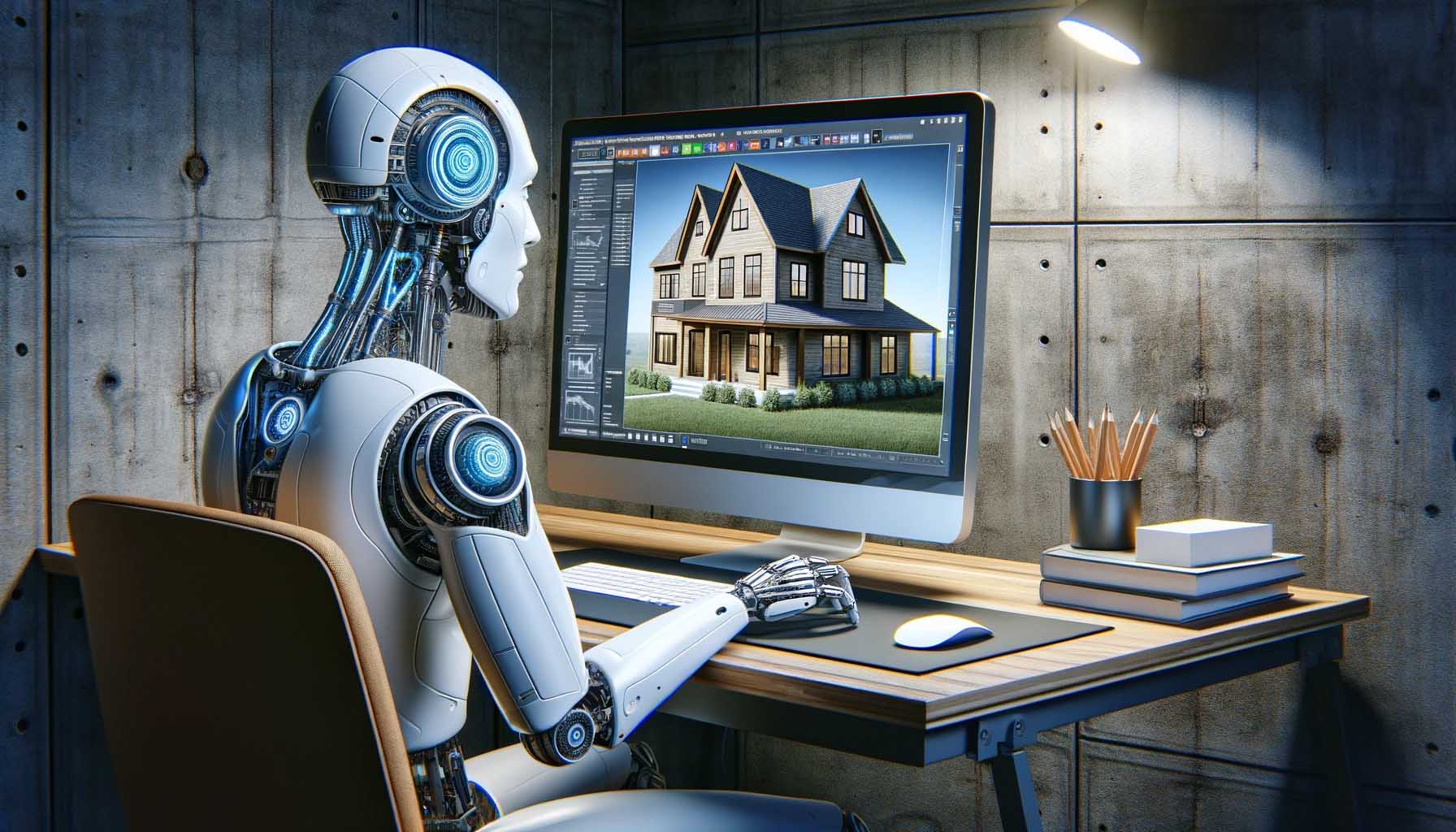
AI’s Impact on Real-Time 3D Environment Creation
Artificial intelligence enables people to design complex 3D models and worlds with negligible human effort in the shape of text, 2D images, or drawings. Deep machine learning algorithms scan through available 3D data to form very detailed models with realistic texture, illumination, and spatial coherence with negligible human effort.
Technologies like generative adversarial networks (GANs) and transformers are now cornerstones of real-time 3D world creation, making it possible for high-fidelity prototyping and optimization within interactive worlds. Such AI technology, besides freeing drudgework like meshing and texture mapping, facilitates creative discovery by bringing together sets of design options from user-specified parameters.
Applications across Industries
- Gaming and Entertainment
AI facilitates efficient building of colossal, highly detailed worlds with dynamic worlds reacting in real time to player action. This is more immersive and easier to develop, with developers spending less time spent on hand modeling that takes up a lot of time. - Architecture and Construction
Computer vision technology to model in 3D provides accurate floor plans, designs buildings with cost- and material-saving materials, and works seamlessly with Building Information Modeling (BIM) software. The benefit is reduced design cycles, reduced material use, and enhanced project visualization at the heart of client decision-making and participation. - Product Design and Manufacturing
Computer-based quick prototyping with 3D models is cost- and time-to-market-effective through facilitating designers to prototype and iterate products virtually before producing them. AI also facilitates stress testing and simulation, improving safety and efficiency.
Benefits and Industry Impact
AI-driven 3D production shortens the turnaround by as much as 70%, bringing the process to hobbyists and enabling small shops and solo artists to produce high-quality material. The global market for 3D modeling will grow at a rate of about 20% per year to 2025, driven by such technological developments.
AI-driven real-time rendering also enhances user experience through smooth blending, interactive graphics and cross-platform compatibility for any degree of devices on which new augmented reality (AR), virtual reality (VR), and metaverse applications are developed. Convergence can produce the ability to transform digital interaction in hybrid mode.
Future Outlook
Future AI programs such as Google’s Genie 3 transform by advancing from simple natural language descriptions to thick, navigable virtual worlds, blending computer processing with creativity. Emerging breakthroughs will make progressively more sophisticated real-time worlds with more spatial intuition, procedural generation, and simultaneous interaction possible for many people.
As increasingly more AI is incorporated into creating 3D worlds, industries will experience increasingly larger innovation cycles, lower cost, and a more interactive user experience, with new business models and immersive virtual worlds driving cross-industry markets.
Conclusion
AI for real-time 3D world construction is a revolutionary capability that allows for fast and realistic creation of interactive 3D worlds with unprecedented convenience and flexibility. Its application in gaming, architecture, product design, and beyond also speaks to the transformative power of AI to unleash the creativity, productivity, and accessibility of 3D content creation.
Over the next few years, AI-driven modeling advancements, real-time rendering, and natural language interfaces will continue to democratize and transform 3D digital experiences to provide engaging opportunities for immersive entertainment, virtual co-creation, and design creation.