

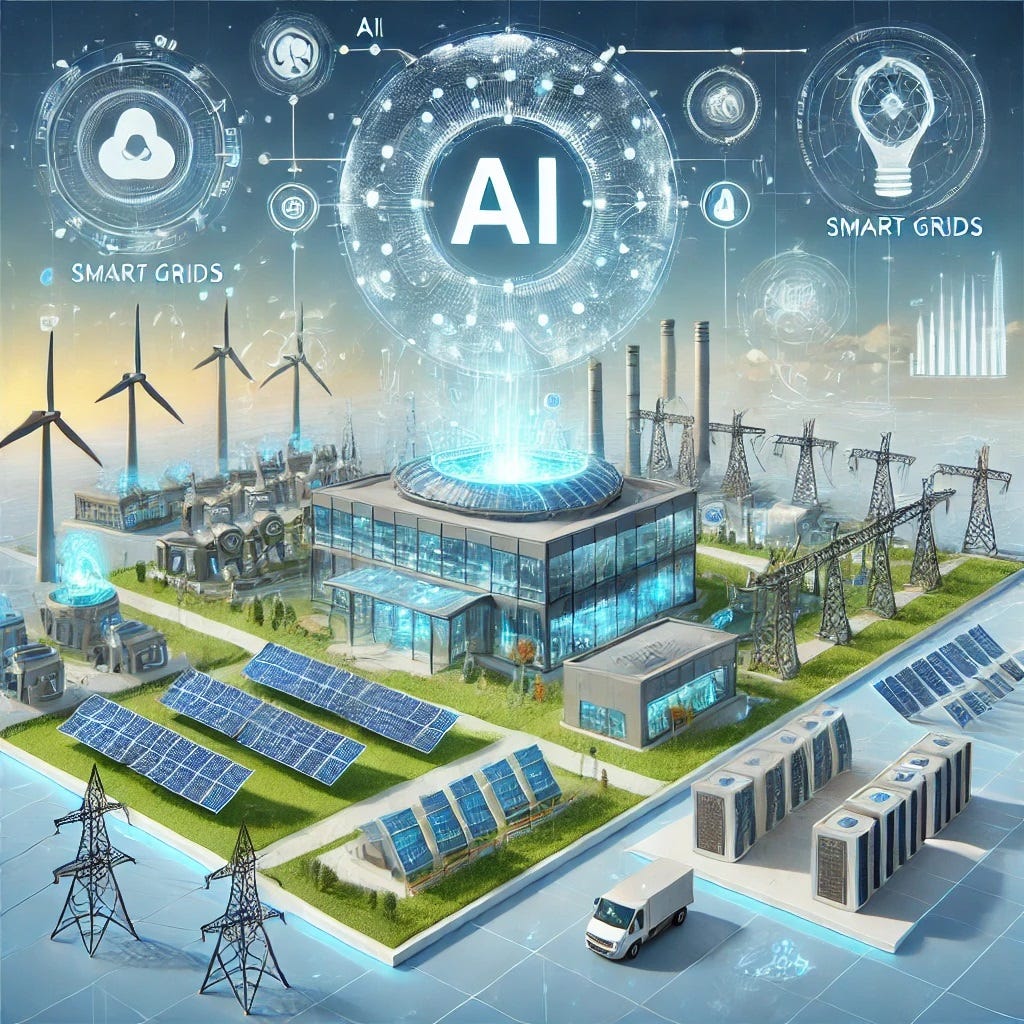
The energy sector is undergoing a profound transformation driven by the integration of artificial intelligence (AI) and blockchain technologies. These innovations are particularly impactful in the development of smart grids-modern electricity networks that use digital communication and automation to optimize energy distribution, improve efficiency, and enhance sustainability. The combination of AI and blockchain is enabling smarter, more secure, and decentralized energy systems that address the challenges of traditional grids while supporting the transition to renewable energy sources.
AI and Blockchain: Complementary Technologies for Smart Grids
AI brings advanced data analytics, machine learning, and predictive capabilities to smart grids. It processes vast amounts of real-time data from sensors, smart meters, and digital twins to forecast energy demand, detect faults, and optimize grid operations. Blockchain, on the other hand, provides a decentralized and tamper-proof ledger that ensures secure, transparent, and automated management of energy transactions through smart contracts. Together, they create a resilient and efficient infrastructure for energy distribution and management.
Enhancing Grid Management and Energy Optimization
AI-powered analytics enable smart grids to predict consumption patterns, balance supply and demand, and recommend operational adjustments to reduce energy waste. For example, deep learning algorithms analyze historical and real-time data to anticipate grid failures and optimize load distribution. Blockchain secures these data exchanges and transaction records, preventing fraud and unauthorized access while facilitating peer-to-peer (P2P) energy trading among consumers and producers.
A notable innovation is the integration of bidirectional energy transfer technologies such as vehicle-to-home (V2H) and home-to-vehicle (H2V). Electric vehicles (EVs) can act as mobile energy storage units, supplying power to homes during peak demand or charging during surplus renewable energy periods. AI optimizes these processes by scheduling energy flows efficiently, while blockchain ensures secure and transparent energy transactions in decentralized networks.
Decentralization and Peer-to-Peer Energy Trading
Blockchain enables decentralized energy marketplaces where consumers with renewable energy installations, like solar panels, can trade excess electricity directly with neighbors without intermediaries. This peer-to-peer trading model reduces transaction costs, fosters renewable energy adoption, and enhances grid resilience. Smart contracts automate and enforce the terms of these trades, ensuring real-time, tamper-proof settlements.
Decentralized charging networks for EVs, supported by blockchain, facilitate secure and efficient energy exchanges between vehicles and the grid. This supports the growing demand for sustainable transportation infrastructure and integrates EVs as active participants in energy ecosystems.
Security, Scalability, and Sustainability
Blockchain’s immutable ledger enhances grid security by protecting against cyber-attacks and ensuring data integrity. However, scalability has been a concern. Innovative consensus mechanisms like Proof-of-Stake (PoS) reduce the energy consumption of blockchain operations compared to traditional Proof-of-Work (PoW), making the technology more sustainable and suitable for large-scale energy applications.
AI-driven energy management systems also contribute to sustainability by optimizing energy consumption patterns, reducing peak loads, and integrating renewable sources more effectively. These systems continuously learn and adapt to changing conditions, improving grid reliability and reducing environmental impact.
Real-World Applications and Future Prospects
Several case studies demonstrate the practical benefits of AI and blockchain in smart grids. For instance, the IntelliGrid AI framework combines deep learning and blockchain to optimize home energy management, achieving up to a 20% reduction in energy costs by enabling efficient P2P trading and bidirectional energy flows with EVs.
Looking ahead, the integration of AI and blockchain is expected to play a crucial role in carbon credit trading and renewable energy certification, ensuring transparency and compliance in sustainability initiatives. The technologies will also support the development of microgrids-localized energy networks that increase access and resilience.
Conclusion
The convergence of AI and blockchain in smart grids marks a significant step toward a more efficient, secure, and sustainable energy future. By enabling decentralized energy management, real-time optimization, and transparent transactions, these technologies address the limitations of traditional grids and accelerate the adoption of renewable energy. Continued innovation and research will further unlock their potential, transforming how energy is generated, distributed, and consumed worldwide.
References:
AI and Blockchain Applications in Smart Grids/Energy Sector, Taylor & Francis
AI and Blockchain in Smart Grids: Fundamentals, Methods, and Applications, Routledge, 2025
AI and Blockchain in Smart Grids – Taylor & Francis eBooks
Binyamin, S., & Ben Slama, S., “IntelliGrid AI: A Blockchain and Deep-Learning Framework for Optimized Home Energy Management,” AI 2025, 6, 34
Blockchain, AI, and Energy in 2025: Transforming the Future of Power, DevDiscourse, 2025
Top 10 Smart Grid Trends in 2025, StartUs Insights, 2024
Blockchain and Machine Learning for Future Smart Grids: A Review, Diva Portal, 2023.
- https://www.taylorfrancis.com/chapters/edit/10.1201/9781003500391-8/ai-blockchain-applications-smart-grids-energy-sector-ushaa-eswaran-vivek-eswaran-keerthna-murali-vishal-eswaran?context=ubx
- https://www.routledge.com/AI-and-Blockchain-in-Smart-Grids-Fundamentals-Methods-and-Applications/Tiwari-KumarTyagi/p/book/9781032812960
- https://www.taylorfrancis.com/books/edit/10.1201/9781003500391/ai-blockchain-smart-grids-shrikant-tiwari-amit-kumar-tyagi
- https://www.diva-portal.org/smash/record.jsf?dswid=-2594&pid=diva2%3A1727334
- https://www.devdiscourse.com/article/technology/3262406-how-ai-and-blockchain-are-powering-the-next-gen-sustainable-homes
- https://www.linkedin.com/pulse/blockchain-ai-energy-2025-transforming-future-power-caithness-rxfoc
- https://www.startus-insights.com/innovators-guide/smart-grid-trends/