

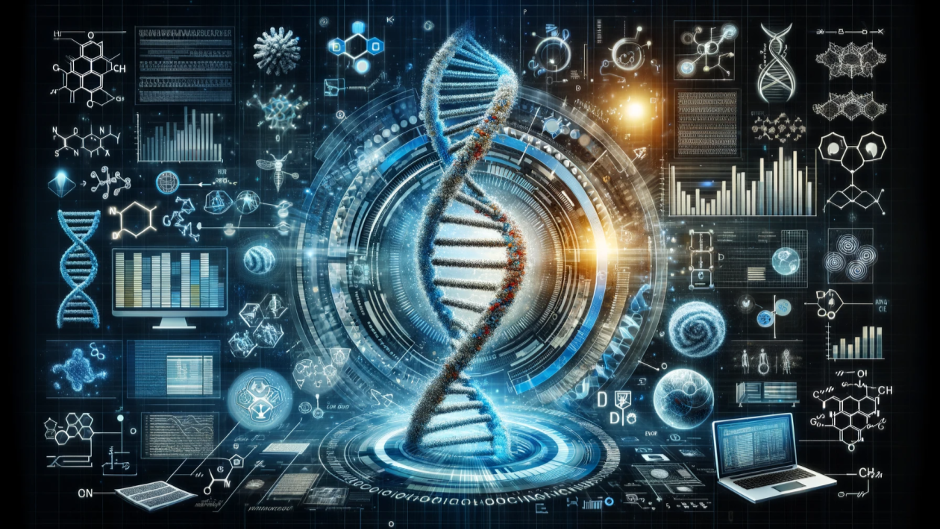
The integration of machine learning (ML) and analysis of genomic information is revolutionizing personalized medicine into a reality through the delivery of disease risk, treatment efficacy, and patient health in ways that are not now possible in 2025. Through the opening of the vast potential inherent in large genetic data sets, ML has the capacity to make very precise medical modalities feasible in an effort to propel diagnosis, prevention, and treatment at the individual level.
Machine Learning Contribution to Genomic Data Analysis
Machine learning uses algorithms that have the potential to identify complex patterns in high-dimensional genomic data—greater than human professionals. The most important applications are:
- Risk Prediction of Disease: Single nucleotide polymorphisms (SNPs), gene expression signatures, and epigenetic signatures are input into ML models to forecast individual risk of cancer, diabetes, cardiovascular, and rare inherited diseases.
- Treatment Response Predictions: Through the comparison of patient genomes and therapy, ML predicts drug response (pharmacogenomics) so that optimal treatment with minimal side effects can be chosen.
- Detection of Mutation and Variants: ML software is fed with whole-genome or exome sequencing and pathogenic mutations are easily and accurately detected, which are utilized in early diagnosis and targeted therapy.
- Biomarker Discovery: ML supports molecular biomarker discovery alongside disease onset, disease development, or response to treatment, informing drug development and clinical trials.
Technical Strategies
- Deep Learning: Recurrent and convolutional neural networks are naturally suited to raw sequence data, detecting hidden patterns with little feature engineering.
- Clustering and Dimensionality Reduction: PCA and t-SNE map and summarize high-dimensional genomic spaces, enabling discovery and classification.
- Multi-Omics Data Integration: ML integrations integrate genomics with other ‘omics’ (proteomics, metabolomics, transcriptomics) to provide an overall understanding of disease and health.
Impact of Personalized Medicine
- Targeted Diagnosis: Personalized genomic profiles enable early-stage diagnosis and on the basis of genetic risk factors rather than clinical symptoms.
- Personalized Therapy: Physicians can prescribe therapies based on the genetic profile of the patient, reducing trial and error, and improving efficacy.
- Prevention: Prevention is guided by genetic risk assessment tailored to the individual and screening and lifestyle counseling.
- Population Health Trends: Genomic interpretation at the population level results in population trends and the generation of evidence-based healthcare policy through cost-effective high-risk population targeting.
Challenges and Considerations
- Data Privacy: Handling sensitive genetic data involves privacy law and secure encrypted storage of data, adherence to regulations like GDPR and HIPAA.
- Interpretability: A requirement to yield clinicians with interpretable and actionable outputs of advanced ML models in order to enable adequate utility and trust.
- Ethical Management: Handling issues related to informed consent, genetic discrimination, and equality of access to personalized genomic medicine.
- Data Diversity and Quality: Diverse, high-quality datasets are required so that ML models are not biased and can be extrapolated across genomics.
Future Directions
Future development of federated learning, transfer learning, and collaborative analytics will overcome regulatory and sharing data limitations to enable research institutions and hospitals to share data without breaching confidentiality. Convergence of edge computing and real-time sequencing technology will also make ML-based genomic analysis possible.
Personalized medicine, as ML leads the way in the interpretation of genomic information, is not only promoted by better health results but also a paradigm shift towards path-breaking proactive care, where prevention and treatment are tailored to the individual based on his/her genetic blueprint.
The work contributes to the revolutionary potential, approach, impact, and frontier of machine learning to interpret genomic information for precision medicine as foundation for innovative research and application in medicine and biotechnology.