

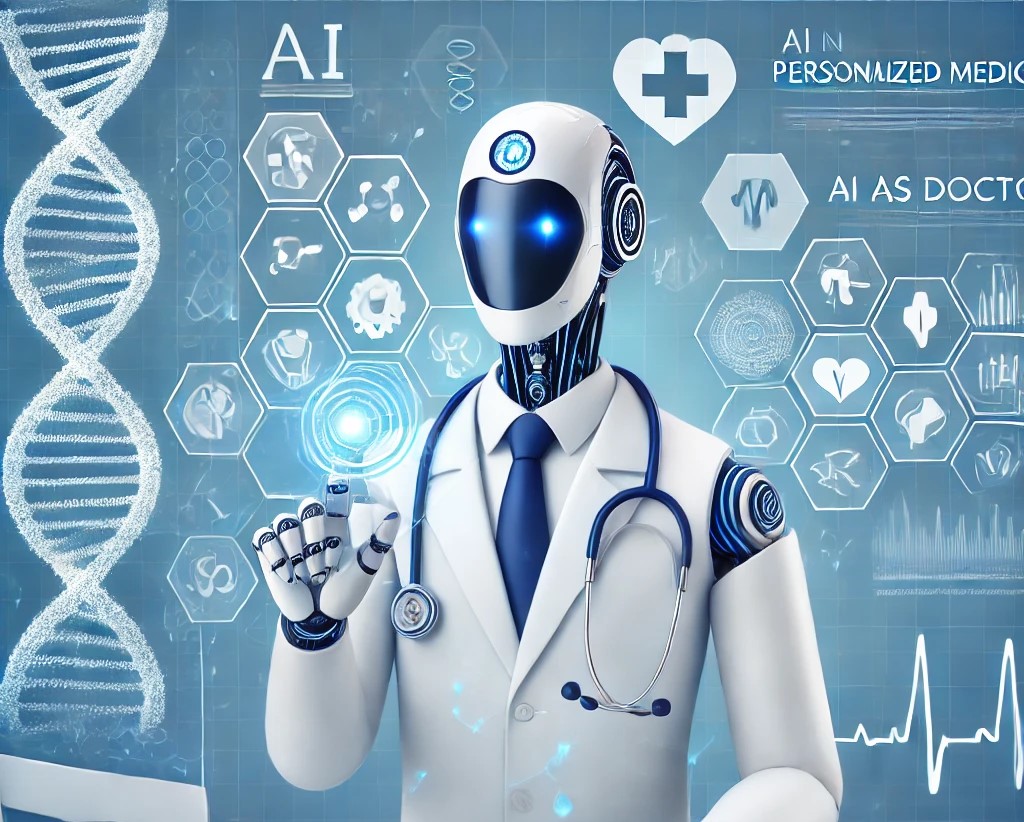
Convergence between the Internet of Medical Things (IoMT) and Artificial Intelligence (AI) is being hastened, transforming healthcare in a virtual sense using advanced ICT (Information and Communication Technology) frameworks. AI-powered IoMT possesses unprecedented potential for accurate diagnostics, precision medicine, telemonitoring, and enhanced patient care—along with new challenges of security, interoperability, and patient data privacy.
Applications and Benefits
- Enhanced Diagnostics and Decision Support:
AI enables IoMT devices such as wearable sensors, imaging equipment, and remote monitoring software to analyze real-time patient data and recognize patterns that are invisible to the human eye. This enables early detection of diseases (e.g., cardiac issues and diabetes), predictive risk analysis, and clinical decision-making to facilitate earlier and more accurate interventions. - Remote Monitoring and Telemedicine:
IoMT assisted by AI facilitates efficient remote patient monitoring with no need for unwarranted hospitalization and ensuring adequate control of chronic disease. They provide continuous data streaming to physicians and trigger real-time alerts for critical vital signs or medication non-adherence. - Automation and Optimization:
With the help of machine learning algorithms, IoMT devices also automatically adjust device parameters according to patient profiles, streamline the use of hospital resources, and coordinate care—workflow efficiency and lowered healthcare cost. - Personalized and Predictive Healthcare:
AI crunches huge amounts of longitudinal health data recorded by IoMT in the interest of precision medicine initiatives. Seamless integration with cloud-based ICT infrastructures allows ongoing model updating for personalized treatment regimens and alert systems.
Security and Privacy in the AI-IoMT Ecosystem
- Enhanced Cybersecurity:
The bigger attack surface of always-connected medical devices raises severe cybersecurity issues. AI-driven cybersecurity advancements such as anomaly detection, blockchain-based device authentication, and federated learning are essential for attack detection and attack mitigation, and patient data integrity and confidentiality. - Privacy-Preserving Technologies:
AI supports privacy-preserving computation (e.g., homomorphic encryption, federated learning) that makes analytics on encrypted data or decentralized training possible without exposing raw patient data—a hallmark of modern, regulation-dense ICT environments.
Challenges and Future Opportunities
- Data Quality and Heterogeneity:
AI performance in IoMT heavily depends on the quality and consistency of available data from heterogeneous sources and devices. Standardization and interoperability remain ICT challenges. - Responsible AI Adoption:
Transparency, explainability, and trust in AI-driven decisions are still concerns. Responsible AI is highlighted by healthcare professionals, with guidelines for use supported by ethical underpinnings and evident regulatory protections driving levels of adoption. - Technological and Engineering Challenges:
Ongoing innovation in AI algorithm development and ICT infrastructure is necessary to provide real-time reliability, miniaturization of devices, power management, and frictionless connectivity.
AI-driven IoMT in ICT systems is a game-changer in modern healthcare. It promises intelligent sensing, real-time monitoring, data-driven decision-making, and proactive risk management. Amidst technical, ethical, and regulatory issues, the convergence of AI and IoMT can transform digital health, making it more accessible, efficient, and patient-centric than ever before.
[1] https://pmc.ncbi.nlm.nih.gov/articles/PMC9330886/
[2] https://www.nature.com/articles/s41598-025-09727-z
[3] https://link.springer.com/article/10.1007/s10796-021-10193-x
[4] https://www.sciencedirect.com/science/article/pii/S0010482524001203
[5] https://www.sciencedirect.com/science/article/abs/pii/S0208521622000468
[6] https://www.ul.com/insights/securing-future-internet-medical-things-2030